
Retinal Vein and Artery Occlusion Treatment Sydney | CRVO, BRVO, CRAO
Retinal blood vessel blockages can cause sudden, painless loss of vision or blurred vision and often require prompt specialist assessment. At Eye and Retina Specialists, we provide expert diagnosis, investigation and treatment of retinal vein occlusion (CRVO, BRVO) and retinal artery occlusion (CRAO, BRAO) using advanced retinal imaging and personalised treatment plans.
We care for patients from Waterloo, Green Square, Zetland, Alexandria, the Eastern Suburbs, Inner West and greater Sydney.
The retina is the light-sensitive tissue at the back of the eye. It depends on healthy arteries to deliver oxygen-rich blood and veins to drain blood away. If one of these blood vessels becomes blocked, the retina may stop functioning normally.
There are two main types:
What Are Retinal Vein and Artery Occlusions?
Retinal Vein Occlusion
A blocked retinal vein can cause bleeding, swelling and fluid leakage into the retina. The blockage causes dilation of the retinal veins, and can cause widespread intraretinal haemorrhages. There is often associated swelling of the macula, the central part of the vision, known as macular oedema.
Vision often becomes blurred, distorted or reduced.
Common types include:
Central Retinal Vein Occlusion (CRVO) – blockage of the main retinal vein
Branch Retinal Vein Occlusion (BRVO) – blockage of a smaller branch vein

Right eye Central Retinal Vein Occlusion
Retinal Artery Occlusion
A blocked retinal artery reduces blood supply to the retina and can cause sudden loss of vision.
Common types include:
Central Retinal Artery Occlusion (CRAO) - sudden blockage in the main artery supplying the retina, resulting in sudden loss of vision in one eye
Branch Retinal Artery Occlusion (BRAO)
Retinal artery occlusion is sometimes described as an “eye stroke” and requires urgent medical assessment.
There are several techniques that can be attempted in patients with a CRAO to reduce the risk of severe vision loss, provided the patient presents within a short timewindow after the onset of symptoms. Investigations are needed to diagnose important underlying medical conditions, and appropriate management instituted.

Central Retinal Artery Occlusion
Symptoms of Retinal Vessel Occlusion
Symptoms may include:
-
Sudden blurred vision
-
Sudden loss of vision in one eye
-
Distorted central vision
-
Dark or missing areas in vision
-
Reduced contrast sensitivity
-
Floaters (sometimes with vein occlusion)
-
Painless visual change
Any sudden change in vision should be assessed urgently.
Risk Factors for Retinal Vein Occlusions
Retinal blood vessel occlusions are more common in people with vascular risk factors, including:
* High blood pressure
* Diabetes
* High cholesterol
* Smoking
* Cardiovascular disease
* Sleep apnoea
* Increasing age
* Clotting disorders (in selected patients)
Sometimes an occlusion occurs despite no obvious prior symptoms.
How are Retinal Vein and Artery Occlusions diagnosed?
Accurate diagnosis is important because treatment and urgency differ between conditions. Assessment for possible retinal vein or artery occlusion may include:
Comprehensive Eye Examination
Detailed examination of the retina, optic nerve and macula.
Optical Coherence Tomography (OCT)
High-resolution retinal scanning to detect swelling, fluid or structural damage.
Retinal Photography
Useful for documenting haemorrhage, vessel changes and follow-up progress.
Fluorescein Angiography
Imaging of retinal circulation to assess blood flow and areas of non-perfusion.
Medical Risk Review
We may recommend review of blood pressure, diabetes, cholesterol or cardiovascular risk factors with your GP or physician.
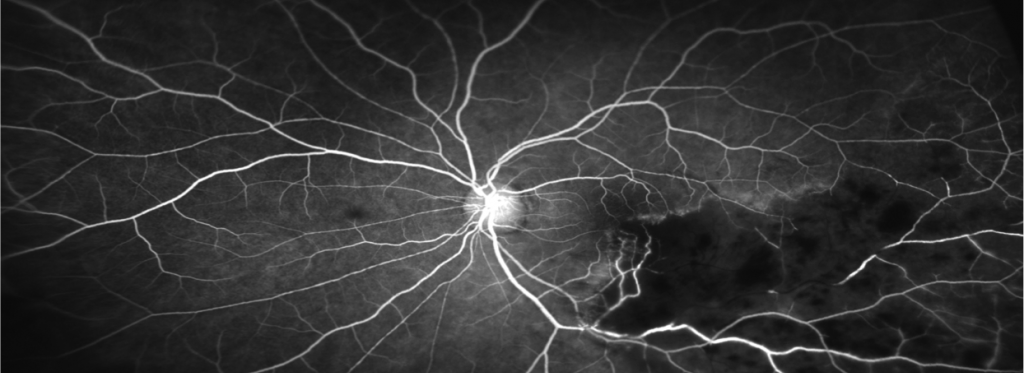
Fundus Fluorescein Angiogram
Treatment for Retinal Vein Occlusion
Treatment depends on whether there is macular swelling, bleeding or retinal ischaemia. This often may include:
Anti-VEGF injections are commonly used to reduce macular oedema and improve or stabilise vision.
Retinal Laser Treatment
Laser may be recommended in selected cases to reduce the risk of new abnormal blood vessel formation and neovascular glaucoma. This is achieved by treating areas of peripheral retinal ischaemia.
Monitoring
Some cases remain stable and can be monitored closely with scans.
Management of Underlying Risk Factors
Controlling blood pressure, diabetes and cholesterol is important for long-term health.

Argon laser in retinal vein occlusion
Treatment for Retinal Artery Occlusion
Retinal artery occlusion requires urgent assessment, particularly if symptoms are recent.
Management may include:
-
Immediate ophthalmic assessment
-
Urgent medical review for stroke and vascular risk factors
-
Investigation for embolic sources or cardiovascular disease
-
Ongoing retinal monitoring
-
Supportive care and visual rehabilitation where needed
Because retinal artery occlusion can be associated with systemic vascular disease, coordination with your GP or hospital team may be important.
What Is the Prognosis for Retinal Vein Occlusion and Retinal Artery Occlusion?
Visual outcomes vary depending on:
-
Which vessel is affected
-
How severe the blockage is
-
Whether the macula is involved
-
How quickly treatment begins
-
Presence of retinal swelling or ischaemia
-
Overall vascular health
Most patients benefit from modern treatment and regular monitoring.
Why Choose Eye and Retina Specialists for Retinal Vein Occlusions and Retinal Artery Occlusions?
-
Experienced retinal specialists
-
Advanced OCT and retinal imaging
-
Personalised treatment plans
-
Clear explanations and communication
-
Convenient Waterloo / Green Square location
-
Care for patients across Sydney and NSW
When to Seek Urgent Attention
Please seek prompt assessment for:
-
Sudden loss of vision
-
New major blur in one eye
-
Distortion appearing suddenly
-
Significant change after previous occlusion
-
New flashes/floaters with reduced vision
Frequently Asked Questions
Q1. Is retinal vein occlusion serious?
Yes - retinal vein occlusion is often a serious ophthalmic condition. It often causes significant worsening of vision, especially if swelling develops in the macula. Early assessment and appropriate management is important. In severe cases, complications can occur that can cause high intraocular pressures, severe eye pain and loss of vision.
Q2. Is retinal artery occlusion an emergency?
Yes. Sudden vision loss should be assessed urgently. Some initial treatments for retinal artery occlusion need to be urgently performed within hours of the blockage occuring. It may be associated with serious systemic conditions that affect the whole body.
Q3. Are eye injections painful?
Most patients tolerate injections well with anaesthetic drops and an experienced clinician. There may be mild discomfort for a few hours after the injection, and if so this is usually improved with paracetamol.
Q4. What are some common causes of sudden painless vision loss in one eye?
Sudden painless vision loss can be caused by retinal artery occlusion, retinal vein occlusion, retinal detachment, vitreous haemorrhage and other urgent eye conditions. Prompt assessment is recommended.
Q5. Can vision recover after a retinal vein or artery occlusion?
Vision recovery depends on the type of occlusion, how severe the blockage is, whether the macula is affected, and how quickly treatment is started. Some patients experience improvement, while others may have lasting vision changes. Early assessment and ongoing monitoring are important.
Book an Appointment
If you have sudden blurred vision, sudden loss of sight, or have been diagnosed with a retinal vein or artery occlusion, contact Eye and Retina Specialists for expert assessment and treatment in Sydney.